

Homemade Rosemary Oil: Easy Recipe, Uses, and Storage
Homemade rosemary oil is one of those little discoveries that change the way you cook every day. I made it for the first time years ago, almost out of curiosity, and it’s never been missing from my kitchen since.
It’s a simple aromatic oil, but capable of giving fragrance and flavour to many dishes: meats, vegetables, purées, potatoes… just a drizzle raw or during cooking to immediately notice the difference. Rosemary releases its aroma delicately, without being bitter or overpowering like sometimes happens when using fresh needles directly in the pan.
I like it because it’s natural, homemade, and uncomplicated: just good extra virgin olive oil and rosemary, with a little patience to allow the aromas to develop.
In this recipe, I use a ratio that yields a fragrant but balanced oil: 3 sprigs of rosemary to 250 ml of extra virgin olive oil.
Sometimes I’ve also made it with dried rosemary pieces ready to use: in that case, I use 3 heaped tablespoons for 500 ml of oil. The result is slightly milder, but still very pleasant.
Recipe Card

Homemade Rosemary Oil
Ingredients
Method
Wash and dry thoroughly 3 sprigs of fresh rosemary.
They must be perfectly dry to avoid moisture in the oil.
Remove the rosemary needles from the sprigs, discarding the woody parts.
Finely chop the needles with a knife.
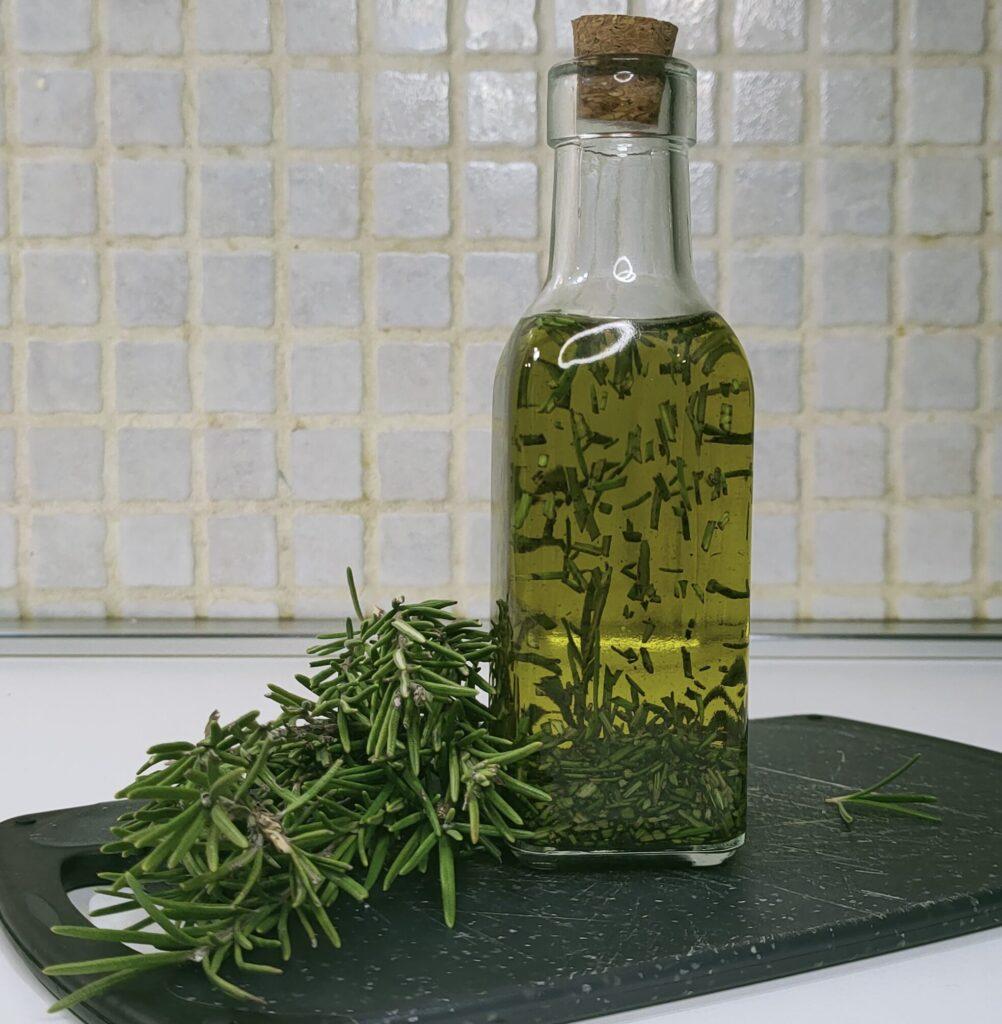
Pour the chopped rosemary into a clean, thoroughly dried bottle.
Add about 250 ml of extra virgin olive oil.
Store the bottle in a room-temperature location, away from direct sunlight, for about 1 week.
As the days go by, you’ll see the rosemary settle at the bottom and darken slightly: this is normal, it means it’s releasing its aroma.


In qualità di Affiliato Amazon potrei ricevere un guadagno dagli acquisti idonei, acquista attraverso il mio Blog per aiutarmi.


Storing Rosemary Oil
Making homemade rosemary oil is simple, but there are some important precautions that ensure a safe and quality result.
Beware of Moisture
Water is the main enemy of oil preserves.
The rosemary must be perfectly washed and dried before being put into the bottle.
After washing, pat it dry thoroughly and let it air dry completely: even a small amount of moisture can compromise its preservation.
Similarly, always use clean and perfectly dry bottles.
How to Store It
Store the bottle:
- away from direct sunlight
- in a cool place
- always well sealed
The ideal environment is a pantry or a kitchen cupboard away from heat sources.
Shelf Life of Flavoured Oil
If prepared correctly:
- it lasts about 1–2 months at room temperature
- it can last longer in the refrigerator
In the fridge, the oil may become cloudy or thicken: this is normal.
It will clear up again at room temperature.
Why Not Expose Oil to Sunlight?
This is one of those tips I’ve learned over time in the kitchen.
Keeping oil away from direct light helps preserve its aroma and flavour better. In fact, with sunlight, the oil tends to spoil more quickly: it can lose its aroma, change flavour slightly, and become less fresh.
This is also why many extra virgin olive oil producers use dark bottles: light is not the friend of oil.
This is also explained in the oil storage guidelines from the International Olive Council.
Therefore, when in doubt, it’s best to keep it in the pantry away from light: it stays good and fragrant for longer.


