
Ragù alla Bolognese: An Easy and Flavourful Slow-Cooked Recipe
Ragù alla bolognese is a recipe that tastes of home, of lazy Sundays, and of pots gently bubbling on the hob. Many consider it a demanding dish, but in reality, with the right steps, it’s much simpler than it seems.
It requires time – about two hours of slow cooking – but it’s precisely this unhurried pace that gives the sauce its rich, enveloping flavour. And while it cooks, you can get on with other things: the ragù does its work on its own.
This is my version of ragù alla bolognese: a homemade recipe that’s simple yet bursting with flavour. You’ll find all the preparation stages in the video.
There isn’t a single definitive version: some add pancetta, others use only beef. I prepare a ragù that’s always tasty and the perfect thickness, starting from a simple rule that never fails:
vegetables in a 1:1:1 ratio.
If I use 50g of onion, I also add 50g of celery and 50g of carrot.
This is the ragù I serve with both short pasta, like rigatoni, and in Sunday lasagne.
A Little Tip Before You Start
For sauces that need long cooking, a pot with a heavy base is very helpful: it distributes heat more evenly and reduces the risk of the ragù sticking.
If you don’t have one, no problem. Just stir occasionally and check the liquid level. If the sauce gets too dry during cooking, you can add half a glass of water. The important thing is to do it while the ragù is still simmering, so the water has time to evaporate properly and the flavour remains full.
How to Prepare Ragù alla Bolognese

Ragù alla Bolognese
Ingredients
Preparation
Prepare the soffritto. Finely chop the carrots, celery, and onions in equal parts. This base is fundamental: it will give the ragù its characteristic aroma.
Sauté the vegetables. Heat a drizzle of extra virgin olive oil in a heavy-bottomed pot.
Add the soffritto and let it soften slowly over low heat, without rushing.
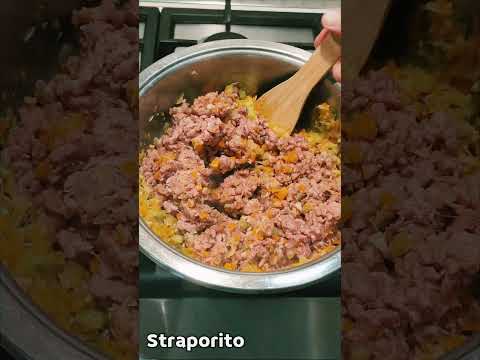
Add the meat. Add the minced meat and stir well to break it up.
Brown it until it changes colour and loses its moisture.
Deglaze with red wine. Pour in the red wine and let the alcohol evaporate completely.
This step enriches the flavour and adds depth to the sauce.
Add the tomato. Stir in the tomato passata.
Fill the bottle with a little water (waste-not!) and pour it into the pot to cover the sauce by about 2 cm.
Slow cooking. Season with salt, cover with a lid, and let it cook over very low heat for about 2 hours.
Stir occasionally and, if necessary, add a little water: the ragù should simmer gently, never boil vigorously.
Final taste. At the end of cooking, taste and adjust salt if needed.
Turn off the heat and let the ragù rest for a few minutes before using it.


As an Amazon Associate, I may earn from qualifying purchases. Buy through my Blog to support me.


Storage
Ragù alla bolognese is one of those sauces that improves with age. It’s even better the next day, as the flavours meld and become more harmonious.
It keeps in the fridge for 2-3 days, well-sealed in a container. You can also freeze it in portions – it’s very handy to have it ready for a quick lunch.
When reheating, do so over low heat and, if needed, add a small cup of water to restore its creaminess.
Frequently Asked Questions About Ragù alla Bolognese
How long should Ragù alla Bolognese cook for, and why?
From my experience, time truly makes a difference. I’ve tried cooking it for less time, but the vegetables remain a bit tough, and the tomato tastes slightly acidic.
With slow cooking, however, everything becomes sweeter and more uniform: the vegetables melt into the sauce, and the flavour rounds out. That’s where the true taste of ragù is born.
Which meats should I use, and why is the mix important?
Beef and pork complement each other. Beef has a strong flavour but can be a bit dense, while pork is more tender and sweeter due to its fat content.
The mix creates balance: a full flavour but a soft consistency. Red wine also helps to balance the fat content and adds aroma to the sauce.
Why is the soffritto fundamental?
I’ll answer with a question 🙂 Have you ever tasted well-sautéed onion compared to one simply steamed or boiled?
When onion and carrot are slowly sautéed, they become sweet and fragrant. That flavour transfers to the ragù and makes it richer and more enveloping.
Skipping or rushing the soffritto means losing a significant part of the flavour.
Extra virgin olive oil also plays its part in the ragù: a good one adds aroma and roundness to the sauce.
Passata or chopped tomatoes: which is better?
I’ve used both. Passata – whether rustic or smooth – works very well because it thickens during cooking and makes the ragù creamier and more uniform.
Chopped tomatoes give a slightly more rustic result. It depends on the outcome you prefer, but with passata, the sauce remains more velvety.


